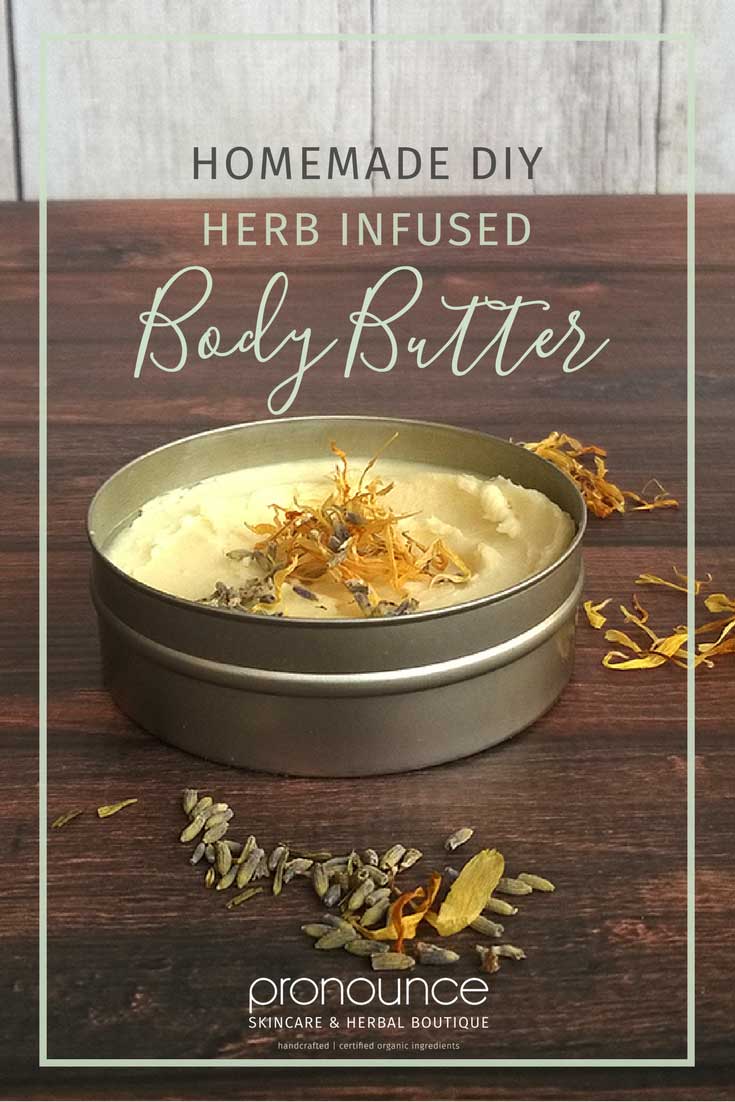
DIY Herb Infused Whipped Body Butter

Last updated on September 10, 2026 by Jess Healey
Originally published on January 23, 2017

There’s something extra satisfying about making skincare with herbs, not because they need to perform miracles, but because the process itself is just plain lovely.

I’ve been infusing herbs into oils for years, and it’s still one of my favorite ways to make a simple DIY skincare recipe feel a little more special. For this whipped body butter, dried calendula and lavender are gently infused into coconut and grapeseed oils before being blended with shea and cocoa butters.

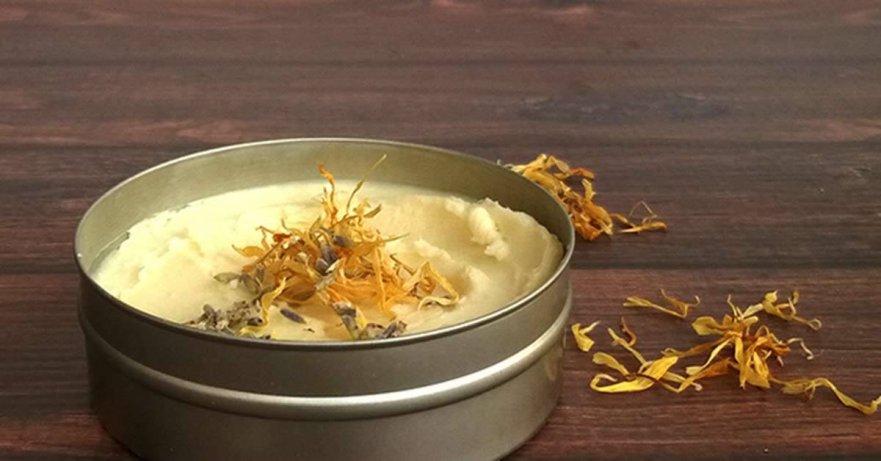
The result is a rich, fluffy body butter with a subtle herbal character that’s especially lovely when your skin is craving something a little richer.

This recipe originally appeared on Pronounce years ago, and while the basic idea has held up beautifully, I’ve simplified the method and updated how I talk about the ingredients. You’ll find no miracle claims here. Just herbs, oils, butters, and a really satisfying afternoon DIY.

What Is an Herb-Infused Body Butter?

An herbal oil infusion is simply a way of steeping dried plant material in oil, allowing oil-soluble components from the herbs to move into the carrier oil.

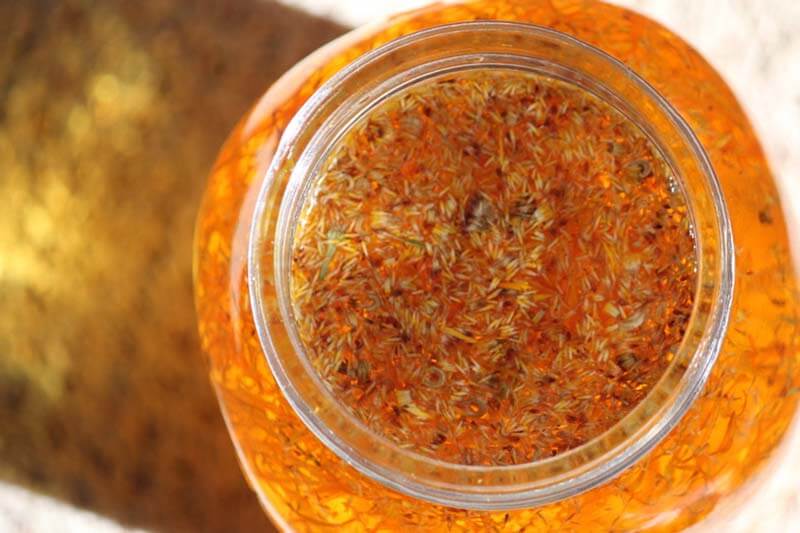
For this recipe, we’ll gently warm dried calendula and lavender in a blend of coconut and grapeseed oils using a double boiler, then strain the herbs out before making the body butter.

Once the infused oil is ready, it’s combined with shea and cocoa butters, cooled, and whipped until light and fluffy. The finished product is still fundamentally a body butter, the herbal infusion is simply what makes this version a little different.

If you’re new to plant butters or curious about why we’re combining several different fats and oils instead of using just one, my Understanding Body Butters and How to Use Them in Skincare guide is a great place to start.

Key Ingredients

Dried calendula flowers are one of the two herbs we’re infusing into the oil for this recipe.

Calendula has a long history of use in topical preparations, and you’ll find it in everything from infused oils and salves to creams and balms. Here, we’re keeping things much simpler than my original post: we’re making a calendula-infused oil, NOT treating eczema, psoriasis, sunburns, bug bites, or every other skin condition I apparently assigned to this poor flower in 2017.

Be sure to use fully dried calendula flowers, not fresh flowers, for this oil infusion.

Dried lavender is infused alongside the calendula, adding another botanical element and a subtle herbal aroma to the finished oil.

And once again, its job description has gotten considerably shorter since 2017. The original article claimed lavender could repair skin, soothe irritation, reduce inflammation, and stop itchy bug bites.

We’re not asking it to do all that here. We’re simply using dried lavender as part of our herbal oil infusion.

Coconut oil makes up part of the herbal infusion and also helps give the finished body butter its texture.

Because coconut oil is solid at cooler room temperatures but melts readily against warm skin, it works nicely alongside the softer grapeseed oil and firmer plant butters in this recipe.

Grapeseed oil gives us a lighter liquid carrier oil for our herbal infusion and helps soften the overall body butter formula.

My original article got a little carried away discussing acne, astringency, linoleic acid, and whether rosehip oil is drying.

Its role here is straightforward: it’s a lightweight liquid carrier oil that balances the heavier fats in the recipe.

You might also want to take a peek at this article I wrote to get a better understanding of carrier oils: How to Choose Carrier Oils.

Shea butter adds richness and softness to the finished body butter while helping create that creamy, scoopable consistency we’re after.

If you’ve been following along with our other body butter recipes, you already know I’m a longtime shea butter fan. It’s softer than cocoa butter, so using the two together gives us a nice balance of firmness and spreadability.

Cocoa butter is the firmer butter in this recipe, helping give the finished product structure so we’re not left with a jar of whipped oil soup.

It also brings its naturally warm cocoa aroma, which pairs surprisingly nicely with the subtle herbal character of the calendula and lavender infusion.

DIY Herb Infused Whipped Body Butter

Jess Healey
This rich, fluffy body butter begins with coconut and grapeseed oils gently infused with dried calendula and lavender, then combines the strained herbal oil with shea and cocoa butters. Chill, whip, and spoon it into a jar for a simple botanical body butter that’s especially lovely during the cooler months.
No ratings yet

Equipment

  • 1 Double boiler — I make my own with a glass bowl over a simmering pot of shallow water.
  • 1 Fine-mesh strainer
  • 1 Cheesecloth or clean muslin
  • Measuring cups and spoons
  • 1 Mixing bowl
  • 1 Whisk or spatula
  • 1 Hand or stand mixer with whisk attachment
  • 1 Clean, dry glass jar or metal tin with lid

Ingredients
  

For the Calendula + Lavender Infused Oil

  • Cup Coconut oil
  • Cup Grapeseed oil
  • 2 Tbsp Dried calendula flowers
  • 2 Tbsp Dried lavender flowers

For the Whipped Body Butter

  • ½ Cup Prepared calendula + lavender infused oil
  • ½ Cup Cocoa butter
  • 2 Tbsp Shea butter

Instructions
 

Prepare your double boiler.

  • Add a few inches of water to the bottom pot and bring it to a gentle simmer.

Combine the oils and herbs.

  • Add the coconut oil and grapeseed oil to the top of your double boiler along with the dried calendula and lavender. Once the coconut oil has melted, stir gently to make sure the herbs are thoroughly coated in oil.

Infuse for 2 hours.

  • Keep the mixture over very low, gentle heat for approximately 2 hours, stirring occasionally. Keep an eye on the water level in the bottom of your double boiler and add more water as needed.
  • The goal is to gently warm the herbs in the oils… not cook them. Keep the heat low, and don't allow water or condensation to drip into the oil.

Strain thoroughly.

  • Remove the infused oil from the heat and allow it to cool enough to handle safely. Strain it through a fine-mesh strainer lined with cheesecloth or clean muslin, removing as much of the plant material as possible.

Measure your infused oil.

  • Measure ½ cup of the strained herbal oil for the body butter. If you’re slightly short after straining, top it off with a little additional grapeseed oil.

Melt the body butter ingredients.

  • Add the ½ cup infused oil, cocoa butter, and shea butter to your clean double boiler. Heat gently, stirring just until the solid butters have completely melted and everything is combined.

Chill.

  • Pour the melted mixture into a clean, dry mixing bowl and refrigerate until it has firmed but isn’t completely solid. Check it periodically and give it a stir as it cools to help the mixture solidify evenly.

Whip.

  • Using the whisk attachment of a hand or stand mixer, whip the cooled mixture until it becomes lighter, fluffy, and creamy… think whipped cream.

Transfer and store.

  • Spoon the finished body butter into a clean, completely dry glass jar or metal tin and close tightly.

Notes

  • Use dried herbs only. Make sure your calendula and lavender are fully dried before infusing them into oil. Fresh plant material introduces moisture into the formula, so I don’t recommend substituting fresh herbs here.
  • Keep the heat gentle. I infuse the dried herbs over very low heat in a double boiler for about 2 hours. Check the water level periodically and add more as needed. We’re gently warming the herbs in oil, not cooking them.
  • Keep water out. Use clean, completely dry equipment throughout the process. Be especially careful that water or condensation from the double boiler doesn’t make its way into your infused oil.
    Strain thoroughly. Remove as much plant material as possible before making the body butter. I like using a fine-mesh strainer lined with cheesecloth or clean muslin.
  • Temperature matters when whipping. If the mixture is still too warm, it won’t whip properly. If you’ve accidentally chilled it until it’s completely solid, let it soften slightly at room temperature before whipping.
  • Expect some temperature changes. Because this body butter is made from plant butters and oils, it will naturally become softer in warm environments and firmer when it’s cool.
Tried this recipe?Let us know all about it!

How to Apply

A little body butter goes a long way. Scoop out a small amount, warm it between your hands, and massage it into your skin wherever you could use a little extra richness.

I especially love body butter right after a shower or bath, while skin is still slightly damp. This helps seal in some of that moisture and makes a rich butter like this easier to spread.

Because this formula is made primarily from oils and plant butters rather than a traditional lotion-style water phase, it will feel richer than lotion. Start with less than you think you need… you can always add more.

Tip: Give the butter a moment to sink in before getting dressed. Your jeans will thank you.

Storage & Shelf Life

Store your herb-infused body butter in a clean, dry, airtight container away from direct sunlight, excessive heat, and moisture.

Because we’re working with an herbal oil infusion, good handling matters. Always begin with completely dried herbs and clean, dry equipment, strain the infused oil thoroughly, and avoid introducing water into the finished jar.

Use clean, dry hands or a small cosmetic spatula when scooping out your body butter, and don’t store the jar somewhere it’s likely to collect shower water or condensation.

I don’t give homemade skincare like this a firm expiration date without stability and microbial testing. Instead, keep an eye, and nose, on it. If you notice an unexpected change in the smell, color, texture, or appearance, or have any reason to suspect contamination, it’s time to make a fresh batch.

The texture may also change with the seasons. That’s normal for a body butter made with plant oils and butters: warmer temperatures can soften or melt it, while cooler temperatures will make it firmer.

FAQs

I don’t recommend it for this recipe. Fresh herbs contain water, which introduces moisture into an otherwise oil-based formulation. Stick with fully dried calendula and lavender for your infusion.

No, not as a direct substitute. An essential oil and an herb-infused carrier oil are completely different ingredients.

The dried calendula and lavender in this recipe are infused into the coconut and grapeseed oils and then strained out. Adding essential oils would create a different formulation requiring their own appropriate usage rates and safety considerations.

Possibly, but changing the carrier oil can change the feel and texture of the finished body butter.

If you’d like to experiment, my How to Choose Carrier Oils guide can help you compare different options. I’d keep the total amount of liquid carrier oil the same and expect that your finished butter may feel a little different from mine.

Some of your oil will be left behind in the dried herbs and straining material. Starting with ⅔ cup of carrier oils gives us enough to comfortably measure the ½ cup of strained infused oil needed for the finished body butter.

If you end up slightly short, simply top off your strained oil with a little grapeseed oil until you reach ½ cup.

Temperature is usually the culprit.

The mixture needs to be cool enough that the fats have begun to solidify but still soft enough for your mixer to work through them. If it’s still liquid, chill it a little longer. If you’ve let it become rock solid, allow it to soften at room temperature before trying again.

That’s the nature of plant butters and oils. Coconut oil, cocoa butter, and shea butter all change consistency depending on temperature, so your finished body butter will too.

If it melts during hot weather, it’s generally a texture issue rather than automatically meaning the product is ruined. Keep water out of the jar, move it somewhere cooler, and allow it to firm again. You may lose some of that fluffy whipped texture, but that’s okay.

I formulated this as a body butter, and that’s how I’d use it. It’s a rich combination of coconut oil, cocoa butter, shea butter, and grapeseed oil, so I’d save this one for arms, legs, hands, feet, and other areas where you want a richer moisturizer.

I don’t assign a specific shelf life to homemade skincare without appropriate stability and microbial testing.

How long your body butter remains in good condition depends on factors including the freshness and quality of your ingredients, how the herbal infusion was prepared, storage conditions, and how the finished product is handled.

If anything about the smell, color, texture, or appearance changes unexpectedly, or you suspect water or contamination has gotten into the jar, discard it.

A Quick Safety Note

This recipe is intended for topical body use and general educational purposes. Use clean, dry equipment and fully dried herbs when preparing your infusion.

As with any new skincare product, patch test first, particularly if you have sensitive skin or haven’t used these ingredients before. Discontinue use if irritation occurs, and talk with a dermatologist or other qualified healthcare professional about persistent skin concerns.

💝 Make It, Love It, Share It!

If you try this recipe, I’d love to hear from you! Leave a comment, share your tweet, or tag @scratch.mommy on Instagram. Want more DIYs like this? Be sure to grab my free e-book and join my Scratch Mommy community, too.

If you enjoy thoughtful, ingredient-driven DIY skincare like this, you may want to join the Pronounce Skincare newsletter. I share recipes, updates, and behind-the-scenes notes as I continue building new resources and courses.

Cover of Jess's DIY guide - the best of - Pronounce Skincare recipes.
Table of Contents of Jess's DIY guide - the best of - Pronounce Skincare recipes.

Grab your Free copy

Want More DIY Skincare Recipes Like This One?

Sign up for my newsletter and I’ll send you my free e-book filled with tried-and-true DIY skincare recipes—perfect for beginners and experienced makers alike. You’ll also get updates when I share new formulas, ingredient deep-dives, and helpful how-to guides.

Love it? Share it!

Similar Posts

11 Comments

    1. Hi! This will last you a good, long while. Just make sure that you store this in a cool, dry place. Always apply with clean hands. The shelf-life of these ingredients is a year, some more. You’ll use this up long before it would ‘be off’. Happy DIYing!

  1. Can you instead of infusing the flowers in the oils just add essential oils of lavender and calendula?

  2. Hello:) I was curious about your lavender lotion. Is it a lotion or body butter? I make body butters and I know water and oil don’t mix and you would need some kind of preservative since water is included in the lotion. That’s why I’m confused. I would like to try it out but I’m concerned that it will go bad quickly. Thank you:) Love your new shop:)

    1. Hi there. Thanks for stopping by. 🙂 This recipe is a body butter, not a lotion. A lotion is a lotion (by definition) because it has water…a butter does not.

      My lavender-infused body lotion (and my lavender-infused face lotion) both have water. I haven’t found any typical preservatives that I like, but I do add vitamin E and rosemary antioxidant oil…which are as close as you can get to using a preservative. They help my lotion stay good for a long while. Hope this helps…and thanks again for the kind words and for stopping by!

      1. That makes sense! Thank you:) I’ve been looking for a lotion because sometimes I just want something lighter than a body butter:) I just have one more question I forgot to ask in my original comment. Sorry to be a pain! Will it seperate since the ingredients don’t have emulsifiers? I don’t mind mixing it once in awhile but I just wanted to check to see what I should expect:) Thank you:) Ypur recipes have been so great for my daughter! She can’t use anything over the counter. She was born with HLHS (half a heart) and has had 5 open heart surgeries. She just turned 10:) so I have to be very careful what I use on her:) Thank you for taking the time to answer my questions! Kelley

Leave a Reply

Your email address will not be published. Required fields are marked *

Recipe Rating


This site uses Akismet to reduce spam. Learn how your comment data is processed.